
Luke 1:26-38
Profound Realities: A Symphony of Grace and Surrender
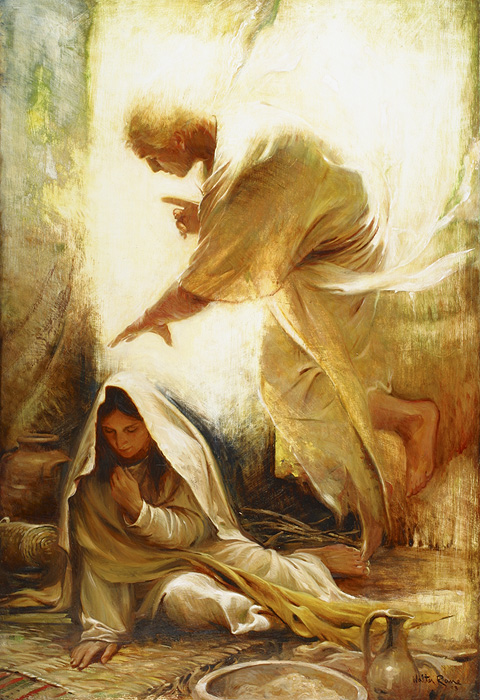
In the quiet hills of Galilee, in a humble town called Nazareth, an ordinary young woman named Mary received an extraordinary visitation. The Gospel of Luke paints this scene with bold contrast and a demand for attention: “In the sixth month the angel Gabriel was sent from God to a city of Galilee named Nazareth, to a virgin betrothed to a man whose name was Joseph, of the house of David. And the virgin’s name was Mary” (Luke 1:26-27, ESV). What unfolds in these verses is not merely a historical footnote but a divinely orchestrated cosmic shift , where the earthly reality of God’s eternal plan collides and then harmonize in the life of a simple maiden. As we meditate on Luke 1:26-38, we are invited to marvel at the divine sonship of Jesus, the miraculous work of the Holy Spirit, and the boundless grace of God that transforms fear into faithful surrender. This encounter reminds us that God’s greatest works often begin in the most unassuming places, calling us to echo Mary’s humble response in our own lives.
At the heart of this passage, we discover a new rhythm in God’s revelation of his salvation for his creation – the overpowering truth of Jesus’ divine sonship. Gabriel’s announcement to Mary is laced with grand declarations: “And behold, you will conceive in your womb and bear a son, and you shall call his name Jesus. He will be great and will be called the Son of the Most High” (vv. 31-32a). This is no ordinary child; He is the eternal Son of God, stepping into, invading human history, advancing against destruction and death. The angel elaborates, “The Lord God will give to him the throne of his father David, and he will reign over the house of Jacob forever, and of his kingdom there will be no end” (vv. 32b-33). Here, Luke reminds us of God’s promises, by recalling ancient prophecies, drawing from 2 Samuel 7:12-16, where God establishes a covenant David an everlasting throne, and Psalm 2:7, which declares, “You are my Son; today I have begotten you.” Jesus is not adopted into divinity; He is the divine Son by nature, the Word made flesh (John 1:14). In a world that often reduces Jesus to a moral teacher or historical figure, the events of that night in Nazareth millennia ago calls to us and demands our worship of the Son. He is God with us, the bridge between heaven and earth, whose sonship secures our adoption as children of God. Imagine the weight of this for Mary—a teenager grappling with the revelation of God that her womb would cradle the Creator of the universe. Yet, in this mystery, we find our hope: because Jesus is the Son of God, no sin is too great, no darkness too deep, for His light to penetrate.
Interwoven with this divine sonship is the indispensable work of the Holy Spirit, the quiet architect of the impossible. Mary, understandably perplexed, questions, “How will this be, since I am a virgin?” (v. 34). Gabriel’s response unveils the Spirit’s role: “The Holy Spirit will come upon you, and the power of the Most High will overshadow you; therefore the child to be born will be called holy—the Son of God” (v. 35). This “overshadowing” recalls the glory cloud that filled the tabernacle in Exodus 40:35, signifying God’s presence descending to dwell among His people. The Holy Spirit, the third person of the Trinity, initiates the incarnation, ensuring Jesus’ humanity is sinless and His divinity uncompromised. Without the Spirit’s creative power, there is no virgin birth, no sinless Savior. This same Spirit, who hovered over the waters at creation (Genesis 1:2), now hovers over Mary, turning human impossibility into divine reality – overcoming the chaos of sin by raising up for us the Prince of Peace. For us today, the Spirit’s work continues—convicting, empowering, and regenerating hearts. In moments of doubt or weakness, we can trust that the Spirit who conceived Christ in Mary is at work in us, birthing faith and fruitfulness where barrenness once reigned.
Yet, the crescendo of this narrative is the limitless grace of God, poured out upon Mary in abundance. Gabriel greets her with, “Greetings, O favored one, the Lord is with you!” (v. 28). The Greek word here, kecharitōmenē, means “one who has been graced,” emphasizing that Mary is the recipient, not the source, of this favor. “Do not be afraid, Mary, for you have found favor with God” (v. 30). This grace is unmerited, choosing a poor, obscure girl from Nazareth to bear the Messiah. It echoes Genesis 18:14, where God asks Sarah, “Is anything too hard for the Lord?”—a question Gabriel reframes as a declaration: “For nothing will be impossible with God” (v. 37). God’s grace defies logic, overturning every human limitation. Mary, though “greatly troubled at the saying” (v. 29), does not retreat in fear. Instead, she embodies humble surrender: “Behold, I am the servant of the Lord; let it be to me according to your word” (v. 38). Troubled yet trusting, she models the essence of faith—acknowledging her smallness while embracing God’s greatness. In her “yes,” we see grace’s transformative power: it doesn’t erase our troubles but empowers us to serve, advancing through our troubles with God’s grace as the wind to our back.
This profound reality is not distant history; it’s a mirror for our souls. In a world of uncertainty, where fears loom large and impossibilities abound, God’s grace invites us to surrender like Mary. Whether facing personal trials, relational strains, or spiritual doubts, remember: the same Son who reigns eternally offers you sonship; the same Spirit who overshadowed Mary empowers you; the same grace that favored her pursues you. Let Mary’s words become your own: “Behold, I am the servant of the Lord.” In that posture, grace unfolds its wonders.
Pray: Heavenly Father, thank You for the divine Sonship of Jesus, revealed through Your boundless grace. Holy Spirit, overshadow our lives as You did Mary’s, turning our troubles into testimonies of surrender. Grant us the faith to say, “Let it be to me according to Your word.” In Jesus’ name, Amen.